Living along Florida’s waterfront offers direct access to some of the most desirable boating waters in the United States. From the Intracoastal Waterway to the open Atlantic along Palm Beach County, boating is part of everyday life for many homeowners.
However, Florida’s marine environment also presents unique challenges. Saltwater, strong sunlight exposure, and marine growth can quickly damage vessels left in the water for long periods.
Installing professionally designed boat lifts is one of the most effective ways to protect a vessel while improving convenience and long-term dock functionality.
This guide explains the best boat lifts for saltwater in Florida, including the lift types commonly used along the coast, the materials that offer the longest durability, and key considerations for property owners before installation.
Why Boat Lifts for Saltwater Are Essential in Florida’s Environment
Saltwater exposure accelerates wear on boats in ways that freshwater environments rarely do.
When a boat remains in the water continuously, owners often face problems such as:
- Hull blistering caused by prolonged water exposure
- Corrosion of metal components such as propellers and trim systems
- Marine growth, including algae and barnacles
- Staining and surface damage along the waterline
A boat lift eliminates many of these issues by keeping the vessel elevated above the water when not in use.
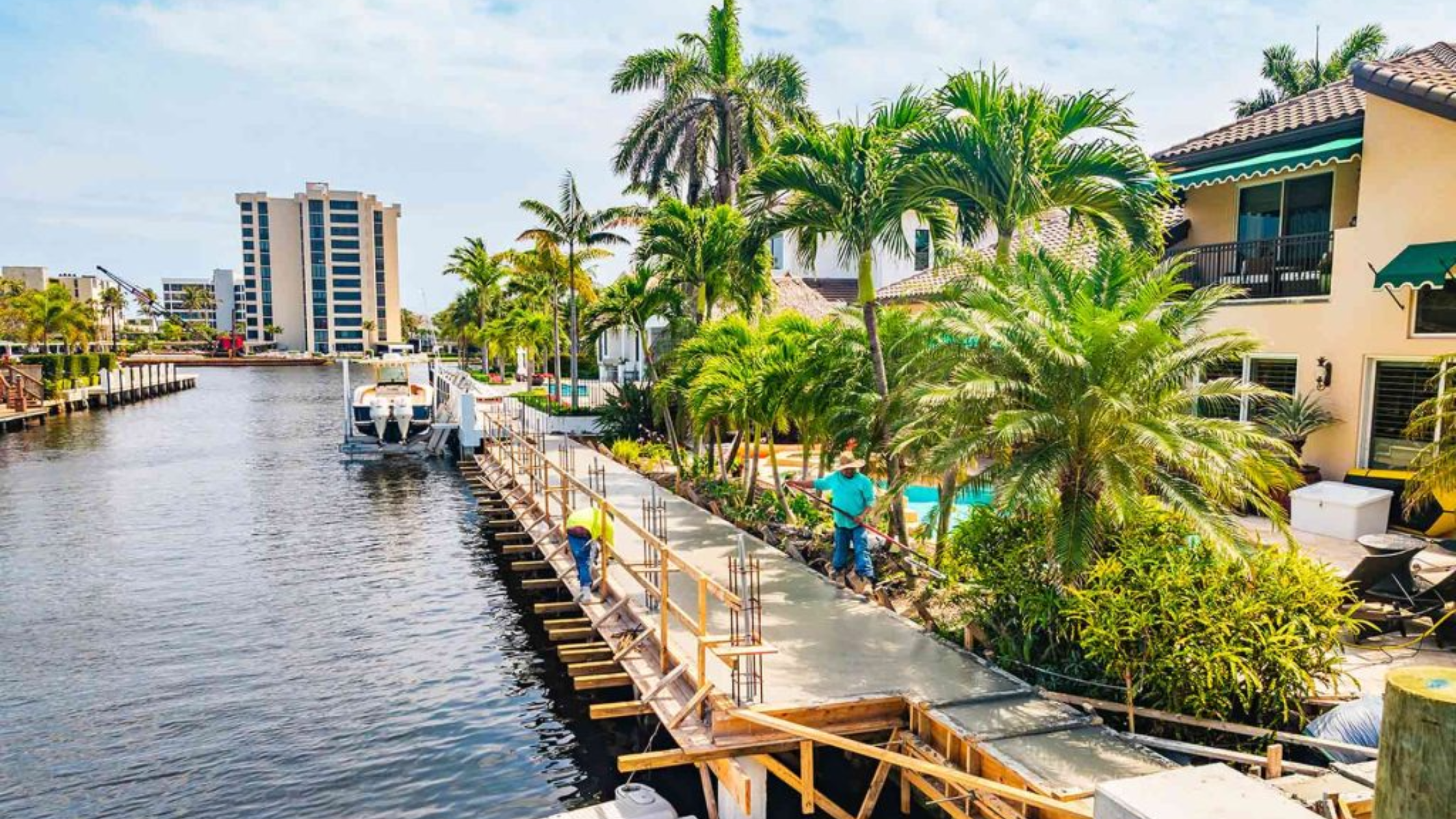
In addition to protecting the boat itself, lifts help reduce maintenance costs. Boats stored on lifts typically require fewer bottom cleanings and less frequent anti-fouling treatments. Saltwater docks and lift systems rely on specialized components similar to those used in marine construction methods and materials designed for harsh coastal environments.
Saltwater boat lifts also provide an extra layer of protection during storm conditions. While no system can eliminate risk during severe weather, a properly installed lift can reduce impact damage caused by waves or dock movement.
Common Boat Lifts for Saltwater Types Used in Florida Coastal Areas
The ideal lift design depends on several factors, including dock configuration, water depth, and vessel size.
Cradle Boat Lifts
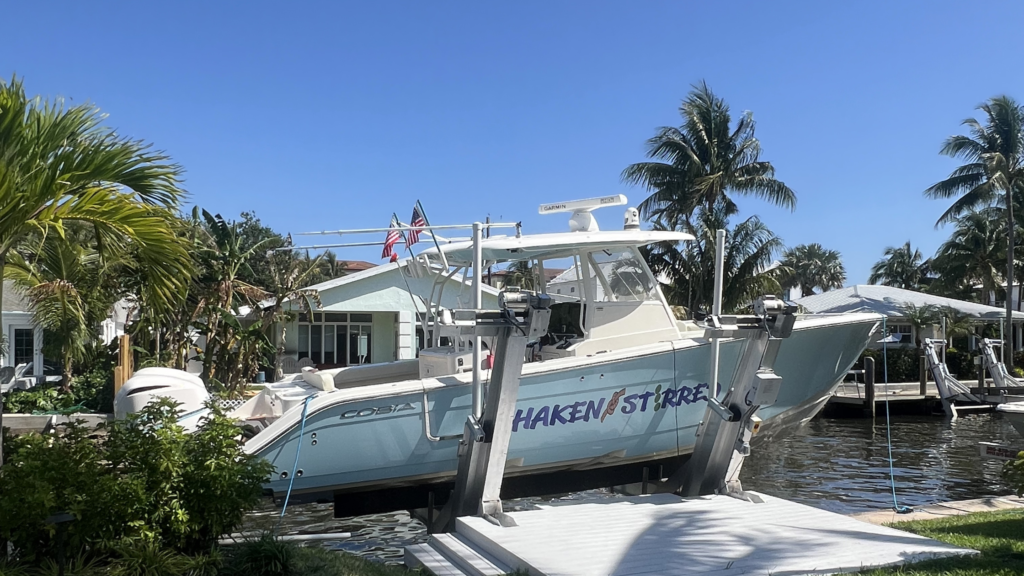
Cradle lifts, often called 4-post boat lifts, are one of the most widely installed systems along Florida’s coastline.
These lifts raise a boat vertically between four support pilings while the vessel rests on adjustable bunks.
Key advantages include:
- Strong structural support for larger boats
- Reliable lifting systems with proven designs
- Compatibility with many dock configurations
Because of their stability and lifting capacity, cradle lifts are commonly used for center console fishing boats and offshore vessels.
Elevator Boat Lifts
Aluminum elevator boat lifts operate along an angled track system attached to a seawall or pilings. Instead of lifting straight upward, the boat moves up and away from the water along the track.
This design is particularly useful in areas where dock space is limited.
Elevator lifts offer several advantages:
- Efficient use of narrow canals or tight waterfront spaces
- Smooth lifting motion
- Minimal obstruction above the dock
They are often installed in residential canal systems where space optimization is important.
Floating Boat Lifts
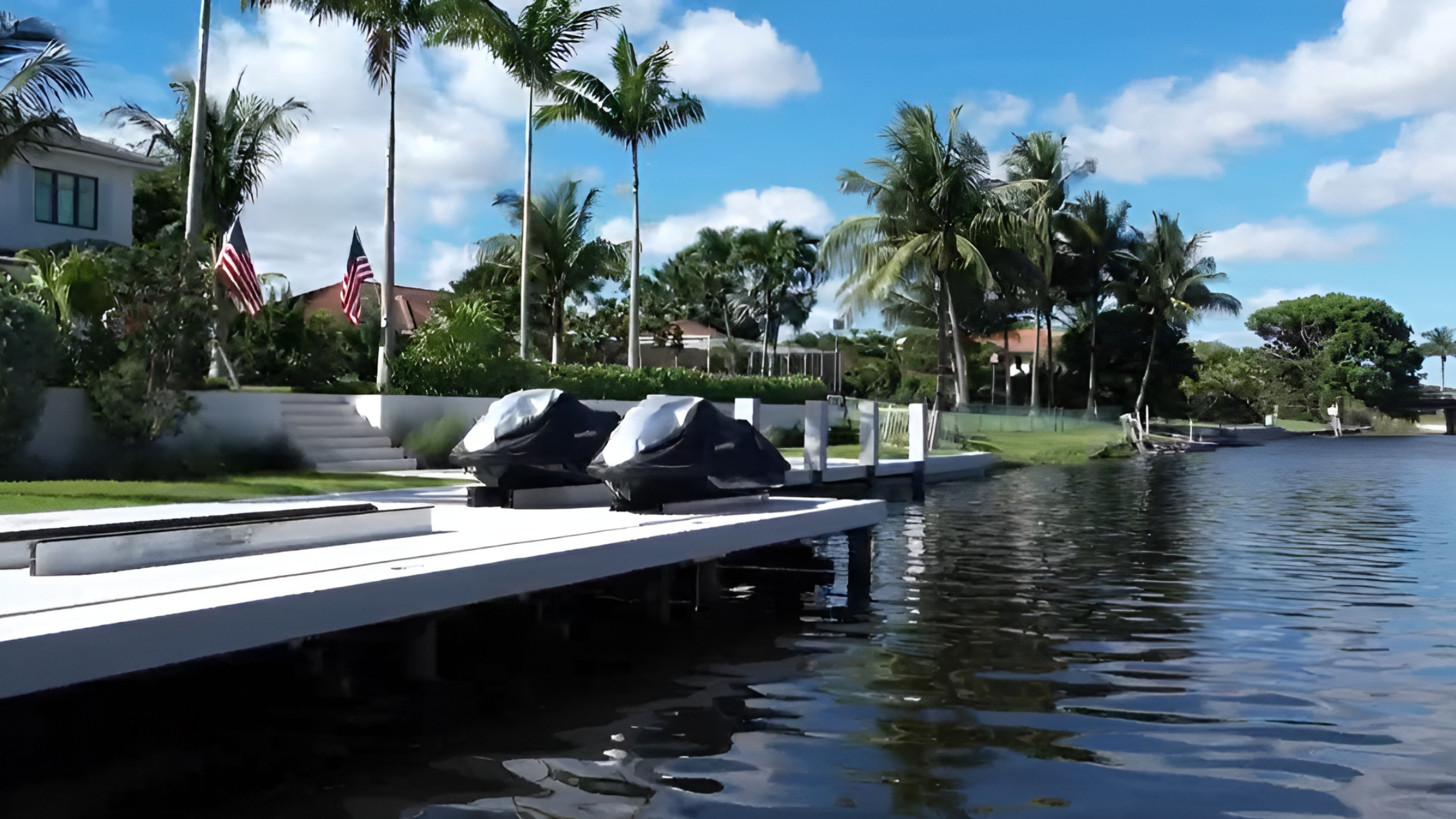
Floating lifts rely on buoyancy rather than mechanical cables. These systems use air chambers or buoyant platforms that raise the vessel above the water.
Floating lifts are often selected in locations where water levels fluctuate significantly.
Typical applications include:
- Tidal areas with changing water depth
- Smaller boats and personal watercraft
- Docks that cannot support heavy mechanical lifts
Some modern floating systems use modular high-density polyethylene platforms designed specifically for harsh marine conditions.
Beamless Boat Lifts
Beamless lifts are a newer design gaining popularity in luxury waterfront homes.
Unlike traditional lifts, beamless systems do not require an overhead beam connecting the lift structure. Instead, independent lifting motors operate at each corner.
Advantages include:
- Unobstructed space above the vessel
- Improved aesthetics around the dock
- Compatibility with boats that have towers or tall hardtops
These lifts are often selected when visual appearance and dock access are important considerations.
Materials That Withstand Florida’s Saltwater Conditions
Material selection has a direct impact on how well a boat lift performs over time, particularly when combined with modern marine construction techniques used in coastal protection. Saltwater corrosion can quickly damage poorly constructed equipment.
Marine Grade Aluminum
Marine-grade aluminum is widely considered the preferred structural material for boat lift frames.
Its advantages include:
- Strong resistance to rust and corrosion
- Lightweight construction that reduces mechanical strain
- Long lifespan in coastal conditions
Many modern lift manufacturers use welded aluminum frames rather than bolted assemblies to improve structural strength.
Stainless Steel Hardware
Hardware components such as bolts, fasteners, and cables are exposed to constant saltwater moisture.
Using marine-grade stainless steel significantly improves durability. High-quality stainless hardware resists corrosion and maintains structural integrity far longer than standard metals.
Lift systems that incorporate stainless motors, brackets, and cable winders generally offer longer service life in coastal areas.
Advanced Marine Composites
Newer lift systems are beginning to incorporate advanced composite materials for critical components.
Examples include:
- Polymer bearings that operate without grease
- Corrosion-resistant bushings and rollers
- UV-stabilized plastic parts designed for marine exposure
These materials reduce maintenance requirements and eliminate corrosion risks in certain components.
Floating lift systems often use high-density polyethylene platforms, which are resistant to saltwater damage and sun exposure.
Permits and Regulations for Boat Lifts in Florida
Boat lift installations in Florida often require regulatory approval.
Permitting oversight typically involves the Florida Department of Environmental Protection, as well as local county building departments.
Several factors can influence permit approval:
- location of the dock within a canal or open waterway
- environmental protection rules related to seagrass beds
- total over water structure size
Florida regulations may limit the size of lift structures and restrict placement in environmentally sensitive areas.
Because permitting requirements vary by county and waterway type, working with experienced marine construction professionals helps ensure compliance before installation begins.
Boat Lifts and Waterfront Property Value
For many waterfront homeowners, a boat lift adds more than convenience. It also improves property functionality and resale appeal.
Buyers searching for waterfront homes frequently prefer properties that already include a lift because it allows immediate dock access without additional installation work.
A properly designed lift also demonstrates that the dock infrastructure has been maintained with boating use in mind.
In coastal communities throughout South Florida, boat lifts are often considered an essential feature of a well-equipped waterfront property.
Conclusion
Saltwater conditions along Florida’s coast demand marine equipment built for durability. Choosing the right boat lift involves more than selecting a lifting system. Boat owners must consider structural design, corrosion-resistant materials, and local installation requirements.
Cradle lifts, elevator systems, floating platforms, and beamless designs all provide effective solutions depending on dock layout and vessel size. When combined with marine-grade aluminum construction, stainless hardware, and proper maintenance, these systems can protect boats for many years in harsh coastal environments.
For waterfront homeowners in Palm Beach and across South Florida, a well-built boat lift is one of the most valuable improvements that can be made to a dock. It protects the vessel, simplifies daily boating access, and helps preserve the consistent marine use value of both the boat and the property.